Existen miles y miles de
hierbas, plantas, musgos y líquenes en el Orbe que tienen algún uso, tanto común
como esotérico. En esté capítulo aparecen listadas unas pocas de ellas, las más
conocidas si cabe.
Clasificación de las Hierbas
Todas las hierbas se clasifican de tres maneras, por lo frecuentes que son
(Frecuencia), por dónde crecen (Entorno) y por cómo se recogen (Cosecha).
Frecuencia
La dividimos en cuatro tipos:
• Común: hierbas fáciles de encontrar. Se necesita una tirada de 10 en
Herbalismo o, para personas no entrenadas, CD 15 en Percepción, Saber
Naturaleza o Supervivencia, asumiendo que están en una zona donde la planta crece.
• Poco común: todavía relativamente comunes pero sólo si sabes dónde mirar. La
CD para encontrarlas es 15 con Herbalismo o, para personas no entrenadas, CD 20
en Percepción, Saber Naturaleza o Supervivencia.
• Raro: hierbas y plantas que se encuentras únicamente en ciertos entornos y son
difíciles incluso para el buscador experimentado. CD 20 en Herbalismo y CD 25 en
Percepción, Saber Naturaleza o Supervivencia.
• Muy rara: algunas plantas únicas en ciertas áreas, que sólo los expertos son
capaces de encontrar. CD 25 en Herbalismo.
Entorno
Describe las condiciones geoclimáticas habituales en el Orbe (aunque la mayor
parte de este Herbolario se centra en el continente de Draak).
Cosecha
La clasificación por tiempos de cosecha es más que nada un indicador de si las
plantas están disponibles en ese momento o no. En caso de que se usen diferentes
partes de una planta, se mencionan diferentes períodos del año en los que pueden
ser recolectados.
• Anual (u otoñal), como muchos cultivos, les lleva un año entero el crecer y no
son cosechados hasta que no están completamente crecidos en otoño.
• Perennes son hierbas que no necesitan ser replantadas y volver a crecer cada
año. Siguen patrones de echar brotes y florecer (si lo hacen) e igualmente de
madurez y cuando la planta se marchita, cada año. En midsummer es el
mejor momento para recolectar perennes.
• Bienales son plantas que requieren dos años completos para madurar y producir
sus frutas, flores y semillas. Se suelen cosechar cada dos veranos.
Plantilla de Hierbas
Abajo está la plantilla de hierbas útil para herbalistas, alquimistas,
curanderos, apotecarios y otros.
Nombre de la hierba
Frecuencia: [Definida arriba como común, poco común, rara y muy rara]
Entorno: [Áreas donde crece]
Cosecha: [Ciclo de crecimiento, Anual, Perenne u Bienal]
Coste: [Precio base orientativo, indicando el tamaño, condición o cantidad]
Uso de juego: [Si indica si se usa como Componente (Objeto u Conjuro), Decoración (perfume,
incienso, o flores secas), Pigmento/Tinta, Hierba (Comida, Especia o Té), Medicina (con
sus usos inmediatos aunque no siempre discernibles a efectos de juego), o Especial
(con una nota sobre el efecto de juego inmediato, desde venenos a beneficios
mágicos u inconvenientes de la hierba en particular)]
El texto general suele incluir una breve descripción de la planta, su uso
general y lo que popularmente se conoce, desde en cocina a usos folclóricos,
además de los usos que sólo conocen herbalistas,
alquimistas, druidas o sabios. Si la hay, se explica cualquier circunstancia
especial acerca de su recolección correcta y cualquier método especial requerido para conservar
la hierba. Se menciona brevemente el tipo de objetos u conjuros en las que la hierba
puede ser usada como componente o potenciador, así como las CD de Herbalismo necesarias para los distintos usos de
la planta y si alguna otra habilidad tiene competencias (como Alquimia). Cuando
no se menciona una dificultad se entiende que cualquier personaje con Herbalismo
lo puede hacer con un simple coger 10. En ocasiones se habla de la
historia del nombre de la planta.
HERBOLARIO
Acacia

Frecuencia: Rara
Entorno: Tierras cálidas
Cosecha: Anual
Coste: 4 mp/onza (30 gr) de flores secas u hojas; 6 mp/oz. de savia; 10mp/libra
(500 gr) de
astillas de madera
Uso de juego: Componente (Objeto),
Decoración/Incienso (Inhalar humo de acacia añade un +1 a las TS de Voluntad por
1 hora), Pigmento/Tinta, Especial
La acacia es un árbol pequeño de corteza fina, hojas
compuestas redondeadas y racimos de pequeñas flores amarillas y blancas. Su
corteza se usa comúnmente para hacer incienso, quemándola directamente en
cualquier fuego, y de sus flores amarillas se obtiene un sutil pigmento
amarillo. Si se efectúa una incisión en el tronco, la savia viscosa fluye con
facilidad fuera del árbol y es habitual recolectarla para una gran variedad de
usos (se la llama comúnmente goma alina entre los círculos de alquimia).
Recolectar y preservar las flores, hojas u corteza no requiere nada especial,
aunque la savia pegajosa sólo puede ser extraída tras el solsticio de verano y
ha de ser almacenada en jarras al vacío para evitar que se conviertan en un
tapón macizo. La resina de acacia se usa como componente primario en muchas
pomadas y ungüentos. El nombre acacia proviene de la palabra ilka "akis",
que significa espinas. Se lo puso el sabio y herbalista vúlparo Horras de Sör
alrededor del siglo XI AS. en su obra De materia médica. Horras menciona
en su texto que la acacia se usaba en la antigua Sigia desde tiempos
inmemoriales para embalsamar momias.
Acónito (matalobos o luparia)
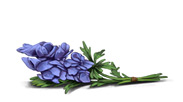
Frecuencia: Poco común
Entorno: Cualquier temperatura, aunque es más abundante en zonas montañosas. Se
encuentra junto a los cursos de agua y, en los bosques, en lugares húmedos y
sombríos.
Cosecha: Perenne
Coste: 5 mp/ramo de un palmo u onza (30gr) de semillas; 10 mp/decocción de
sirope
Uso de juego: Componente (Conjuro), Medicina (antídoto vs.
venenos animales, +3 a TS de Fortaleza), Veneno, Especial
(Comer antes de una hora tras el ataque de un licántropo para ganar una TS de
Fortaleza CD 20 para prevenir los efectos de la maldición de licantropía).
El acónito es una planta herbácea de tallo simple y erecto, cubierto de hojas
oscuras brillantes de envés claro y racimos de hojas púrpuras con forma de
capucha de fraile sillenita (de donde le vienen algunos de los otros nombres
populares, el "capuchón de monje"). Es moderadamente venenosa al tacto cuando
está fresca (produciendo un sarpullido en la piel) y extremadamente venenosa (la
más potente de todo Draak) si se hierve o infusiona con comida o bebida (TS
Fortaleza CD 18 para evitar vomitar en 15 min y perder 2d6 de Con y 1d4 de Fue;
tras otros 15 minutos TS Fortaleza CD 25 o 3d6 Con y 2d4 Fue). A pesar de estos
peligros a menudo se mantiene a mano para evitar la licantropía o como
componente para los raros conjuros que permiten invisibilidad.
Cuando se va a recoger acónito no se puede buscar otra planta a la vez ese día y
el herbalista ha de ser cuidadoso tras dicha tarea y lavarse a conciencia para
evitar ningún tipo de envenenamiento por contacto (y evitar el sarpullido o
males mayores). Para evitar la licantropía se suele masticar seco o en sirope
con alguna otra hierba para disimular su sabor desagradable. Para preparar el
veneno es una CD 11 de Herbalismo u Alquima. El preparado medicinal contra
venenos animales es una CD 16 de Herbalismo, y secar la planta para que se pueda
masticar sin peligro es una CD 17 de Herbalismo. La palabra acónito proviene del
vilonio "akontion" que significa dardo, debido a que los pueblos svardos
lo utilizaban para envenenar sus flechas.
Agathosma -buchu-
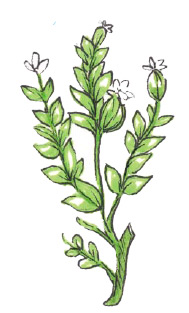
Frecuencia: Rara
Entorno: Cualquiera templado, preferiblemente en lugares donde sólo llueve en
invierno
Cosecha: Bienal
Coste: 5 mp/oz. (30g) de hojas o corteza,
secado o pulverizado
Uso de juego: Componentes
(Objetos/Conjuros), Medicinal (aplicado tópicamente añade un +2 a la tirada de
Sanar para heridas críticas -ver Sanar-)
La agathosma es un arbusto de hojas perennes ovaladas,
crecen en ramas que surgen de tallo central. Las flores son blancas y con forma
de estrella. En Draak no tiene usos populares comunes y se le trata como un
arbusto más, aunque en Ankay esto es diferente pues los pueblos alinos y yu usan
las hojas y el aceite de esta hierba agradablemente perfumada para curar
heridas, problemas digestivos y problemas al orinar. Los yu -que la llaman
buchu- suelen masticar esta planta para aliviar problemas estomacales y
mezclan las hojas con grasa de oveja como ungüento para curar heridas. La planta
huele y sabe a grosella negra picante, como una especie de mezcla entre romero y
menta. Entre videntes, adivinos, adeptos y magos, el agathosma tiene funciones
adivinatorias y para provocar visiones. Para mantener estas funciones
adivinatorias, la planta sólo puede ser cortada por la noche y sólo con plata o
herramientas bendecidas. De la misma forma, el pulverizado para convertirla en
polvo sólo puede ser realizado con morteros purificados o bendecidos. Una vez
convertido en polvo e ingerido o mezclado con olibanus y quemado, la agathosma
sirve para Maximizar el potencial de cualquier adivinación. Realizar todo esto
correctamente requiere una tirada de Herbalismo CD 17.
Agave -maguey-
Rarity: Rare
Environment: Any warm desert
Harvest: Annual
Cost: 50 sp/oz. of powdered root
Game Use: Component (Items/Spells)
This small, ugly cactus-like plant only grows
as high as a foot in thick succulent
spiny leaves not unlike very
thick holly leaves. The only
part of the plant used by
anyone is the root, which in
dried and powdered forms
is a powerful aphrodisiac.
Thus it is a highly sought-after component for philters
and potions and spells that
affect emotions.
Agrimonia
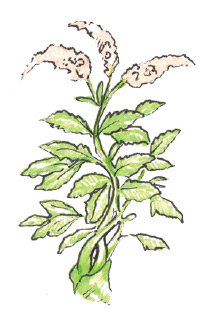
Rarity: Common
Environment: Temperate hills
Harvest: Perennial
Cost: 5 cp/oz. of dried flowers
and leaves
Game Use: Component (Spell),
Decoration/Scent
This unassuming plant
grows quickly, its twisted
rhizomes spreading over low walls and
other barriers and its downy serrated leaves
sprouting all along its length and sometimes
erupting in spikes covered with clusters of
tiny five-petaled golden flowers. The plant
is pleasingly aromatic and is kept in tangles to
mask bad odors. It also finds use among wizards
as a component for counterspells and abjuration
spells.
Ajenjo -wormwood-
Rarity: Common
Environment: Any temperate to warm hills
and plains
Harvest: Perennial
Cost: 5 cp/ 1 oz. of dried leaves and stems
Game Use: Herb/Food, Medicine (Infusions used as
digestive agents and to help expel internal
parasites), Poison (DC 11, Nausea/1d3
subdual)
Wormwood is an ugly perennial
with a tough, dyspeptic green stalk
that grows three feet high and emits
regular pale green three-bladed leaves
and pale olive flowers come summer.
Twigs, leaves, and flowers boiled in
water create a common curative for
digestive ills, though taken and chewed
undiluted or fresh the plant is poisonous.
Alchemists and brewers also boil and
ferment (and sometimes further distill) wormwood to
create and enhance stronger spiced wines.
Albahaca -basil-
Rarity: Common
Environment: Any Temperate
Harvest: Annual
Cost: 5 cp/oz. of leaves, dried or fresh
Game Use: Herb/Food & Spice & Tea, Medicine (stuff 5
fresh leaves into a poisoned wound to gain an immediate
Fort Save vs. poison)
A common herb found in nearly every garden,
basil’s rounded leaves and aromatic scent are
easily recognized by most folk. It is used most
regularly as a cooking spice, but it also works
in a hot infusion as a medicine versus internal
discomforts.
Aletris
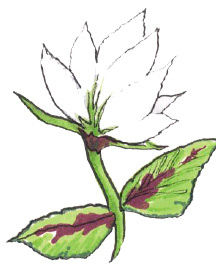
Rarity: Rare
Environment: Any temperate hills
Harvest: Annual
Cost: 20 sp/oz. of dried flowers
Game Use: Component (Item, Spell)
Aletris is a low-growing plant with triangular fan-shaped leaves and stalk-growing
clusters of pale blue-violet to white flowers. Its uses are limited to a spell
component for various abjuration spells and part of the
incense for many priestly rituals.
Amaranto
Rarity: Uncommon
Environment: Temperate hills and
mountains
Harvest: Perennial
Cost: 5 sp/oz. of dried leaves
and flowers
Game Use: Component
(Spells), Dye, Herb/Tea,
Medicine (stops bleeding
and hp loss when applied
to wound as either fresh
poultice or dried and taken
internally as a tea)
Maroon to purple flowers
grow on the amaranth’s green talks, and those stalks redden as they approach their
roots, as do the green leaves with reddish undersides.
Dried and crushed leaf-and-petal mixtures are a standard
tea to cure many stomach ailments or flux, although the
flowers and seeds are more frequently crushed and then
turned into a bright, unfading maroon to purple
dye for clothing or paints.
Amaranth seeds must be collected by
drying the flowers over a sheet and
periodically shaking the stalks to
loosen the seeds. Amaranth flowers,
seeds, and leaves can be used as
components in many abjuration and
enchantment spells alike.
Aquilea común (Milenrama) -yarrow-
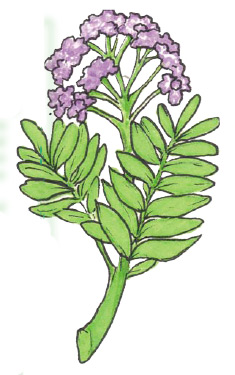
Rarity: Common
Environment: Any temperate
lowlands and marshlands
Harvest: Perennial
Cost: 5 cp/ hand-comb of
flowers (roughly 1/10 oz of
flowers if crushed) or 1 oz.
dry leaf
Game Use: Components
(Spells), Decoration,
Medicine (leaves contain
oils that help stop bleeding if
placed on an open wound)
Yarrow is an erect plant
of slight stems, fern-like leaves
formed of hundreds of tinier leaves,
and small white flowers that grow
in flat combs and clusters atop the herb.
Yarrow’s most common use is as a natural
antiseptic and coagulant—the medieval
version of a sterile bandage—placed over cuts
or applied as a poultice to major wounds. It is
the wizards’ tea of choice, its strong smell often wafting
out of tower windows, though its flowers are also used for
spell components.
Flowers must be harvested in whole combs or clusters.
If used as spell components, they must be divided into
small hand-sized clusters and dried, hanging them
upside down and out of the wind to avoid
knocking any tiny flowers loose. Dried
yarrow flower works as an excellent
component for enchantments, love
charms, friendship spells, and
other spells affecting Charisma and
emotions. Fresh yarrow brewed in
tea aids concentration and some
mages insist it increases their intellect
(though not with any direct game
effects).
Aquilea amarilla (Ropa de Oro)
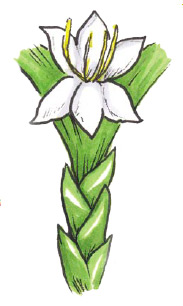
Rarity: Rare
Environment: Temperate to
warm hills and mountains
Harvest: Perennial
Cost: 50 sp/oz. of dried seeds (as
spice) or by stalk (as dye) or by
flower head
Game Use: Component (Spells),
Dye, Herb/Spice, Special (chewing
on a flower/six petals as a free action
provides a one-round speak with animals
effect for imbiber)
This rare plant grows low to the
ground with a tough, variegated stalk of
gold and green, tough protective leaves
forming a tight sheath on the stalk, and
ending in a six-petaled star-shaped flower
of white and gold. The stalks and leaves are
boiled down to pulpy masses and crushed to release a
strong yellow to gold-colored dye, and the flowers and
seeds are crushed and dried as a potent and highly desired
spice for cooking. Among the most esoteric uses for the
flower are its ability to temporarily expand the mind and
allow brief communication with animals and its use as a
component of evocations.
The seeds must be extracted from the flower-heads,
which are dried flat, by tipping the flowers upside-down
after drying to shake the seeds loose. Dyes can only be
extracted from the stalks within a month of harvesting,
after which they are too dry to be useful.
Arciano
Rareza: Raro
Entorno: bosques templados de hoja caduca
Recolección: Anual
Coste: 1 po por kg de madera
Uso en juego: Artesanía (la madera de arciano nunca se pudre), Armería (las
armas de madera de arciano son de calidad), Componente (Conjuros; todos los
componentes que requieran madera, si es de arciano el conjuro obtiene un +2
contra Resistencia Mágica)
Los arcianos son árboles de corteza blanca y hojas rojas,
sagrados para muchos pueblos. Son árboles del norte y tienen la peculiaridad de
poseer rugosidades en el tronco que a menudo pueden confundirse con rostros.
Entre algunos pueblos élficos la tala de uno de estos arcianos significa la
muerte. Los arcianos son considerados sagrados para los seguidores de los
Antiguos Dioses (llamados dioses paganos por los sillenitas) y Ao. Se dice que a
través de los rostros, los antiguos dioses velan por sus seguidores y son
testigos de acontecimientos importantes. También se dice que los druidas pueden
ver a través de los ojos de los arcianos, para ver lugares muy recónditos, o
comunicarse con ellos de alguna forma.
Los arcianos crecen de forma silvestre en algunos bosques, después de que los
vilonios se extendieron por Draak, crearon bosques de dioses, arboledas en sus
castillos y pueblos donde se plantó un arciano único conocido como el corazón
del bosque, por lo que los dioses de la naturaleza podían ser adorados. Los
arcianos se utilizan para dar testimonio de importantes eventos como matrimonios
y se dice que es imposible mentir en presencia de un arciano. Con la llegada de
los arcanos, se impuso la fe sillenita y la Inquisición taló y quemó muchos de
estos árboles, aunque esto dejó de hacerse desde que el Emperador San Dionis
ascendió al trono (la Ley Imperial lo penaba con la muerte), por eso aún quedan
arcianos corrientes en los jardines privados de algunos castillos. Su madera es
muy apreciada. La madera de arciano es un excelente material de construcción, ya
que no se pudre. Su madera se puede utilizar para hacer arcos, lanzas y flechas
que son inmediatamente de calidad. Se puede utilizar para hacer muebles también,
tal como se evidencia en la mesa de reuniones del Salón Blanco en Nevesy, que
está hecha de arciano blanco en forma de escudo, y el legendario trono enano de
Nordya (en Eria), hecho con madera de los árboles élficos vituperados. La madera
también se utiliza en la arquitectura, como las vigas del castillo enando de
Arrak, en Kernia. Dicen que las semillas de arciano, algo muy escaso, sólo
pueden ser tocadas por un elfo o se secan.
Arciso
Rareza: Raro
Entorno: Cualquiera templado
Recolección: Perenne
Coste: 5 mp / oz de hojas
Uso en juego: Componente (Objetos/Conjuros; usar ), Veneno (Unguento azul para
untar en dagas o flechas)
El arciso es un árbol de apariencia poco común, pues tiene
las hojas azules y el tronco de madera clara. Nunca crecen de manera solitaria y
son de aspecto estrecho y apuntado ("arcio" significa lanza en idioma
vilonio). Los lugares en donde crecen suelen tener los suelos prácticamente
limpios de otra vegetación. La esencia de hojas azules de los arcisos es
extremadamente venenosa, de manera que es muy valorada entre asesinos y
alquimistas. Se hace un empaste azul, a razón de una dosis por onza de hojas
usadas. Cada dosis es dura de resistir, CD 19 y causa 1d4 daños de Fue. La
madera se reseca con rapidez y es quebradiza por lo que es muy poco valorada.
Artemisa -mugwort-
Rarity: Common
Environment: Any temperate
Harvest: Perennial
Cost: 5 cp/oz. of leaves or flowers, dried or fresh
Game Use: Component (Items/Spells), Herb/Tea,
Medicine (reduces or eliminates cramps or other problems
tied to female reproduction)
This aromatic plant grows 3 to 4 feet high, with
angular umber-colored stems, green leaves smooth on
top and covered in white hairs beneath, and its button-like flowers that bloom ochre to gold in color. Folklore
says placing mugwort flowers in your shoes allows you to
walk extraordinary distances (though to no game effect),
but most common uses for mugwort lie in midwifery and
its relief of many ailments tied to pregnancy.
This hardy plant needs little pampering or special
treatment in harvesting and is viable in nearly any
preserved preparations. As a spell component, mugwort
is most useful for divinations, and is used in item creation
to purify and prepare scrying devices.
Azuj
Rareza: Raro
Entorno: Islas de los Mares Tranquilos
Recolección: Primavera y verano
Coste: 10 monedas de plata / fruto
Uso en juego: Medicinal (consumirla en poción alquímica cura 1d4 puntos de
vida), Especial (comer el fruto da un +5 a cualquier tirada de Sanar que se
reciba)
El azuj no es un árbol sino un arbusto de tamaño mediano.
Alcanza aproximadamente los dos metros de altura y posee hojas de gran tamaño
que desprenden un olor dulzón. Su fruto, abundante a finales de Marzo hasta
finales de Agosto, posee cualidades curativas. Es de un rojo intenso, muy
oloroso y sin hueso.
Bálsamo de Gilead
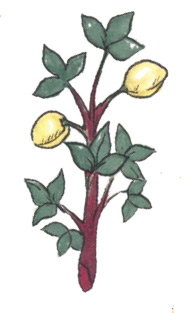
Rarity: Rare
Environment: Warm plains and
hills
Harvest: Biennial
Cost: 40 sp/oz. of dried bark/root or
per bud/seed or per 1 oz. resin
Game Use: Component (Item, Spell)
This aromatic evergreen buds in
late spring and has no common uses. Its
buds, resin, bark, and roots are useful to alchemists and
spellcasters alike, the latter for assation and sublimation
into various creations. The resin is a base for ingestibles
and unguents, and the buds are potent components for
charm and enchantment spells.
Belladona
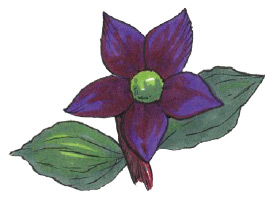
Rarity: Rare
Environment: Temperate forests
Harvest: Perennial
Cost: 50 sp/oz. of dried leaves and flowers, stalks, or root
or 1 oz. of berry juice (12 berries)
Game Use: Poison (DC 15 Nausea/1d8 hp damage
per dose ingested), Special (Eat within an hour of a
lycanthrope’s attack to gain a DC 20 Fort save to resist
lycanthropic curse).
This plant, the largest of the nightshades, has
reddish stalks, bright green leaves with red ribs,
and dull purple berries and flowers. Belladonna
is highly poisonous and generally only harvested
by those creating toxins and poisons. Despite its
dangers, belladonna is also used by adepts and some
religions in an infusion (either ingested or dropped
into the eyes) to aid with visions and auguries in a
ritual setting.
Little effort need be made to preserve belladonna
beyond the normal methods of preservation.
Macerated oils of belladonna have the unique
distinction of being virulent poisons whether used as
a contact poison, injury poison, or ingested poison.
Betonica (Stachys)
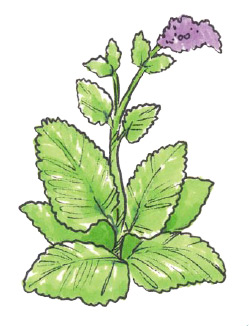
Rarity: Common
Environment: Temperate forests and wooded
marshlands
Harvest: Perennial
Cost: 5 cp/1/2 oz. of leaves or
flowers; 10 sp/oz. tincture.
Game Use: Components
(Spells), Decoration, Medicine
(analgesic, curative for colds; +1 on
Fort save vs. diseases if required)
Betony grows in a crawling
rhizome from which erect stems
extend up to two feet in height,
covered with ragged-edged
leaves in opposed pairs along
the vine and stalks. The stems
end in a cluster of pink to
crimson flowers at the top.
Most apothecaries use this
in infusions to relieve head
congestion, in concoctions to
combat headaches, and in a hot
poultice with red wine to prevent scarring
and to aid in wound closure.
Wood betony should be harvested as a whole plant
and dried hanging upside-down in loose bunches. The
roots should be discarded after drying and the seeds
and flowers stored in airtight containers separate from
the leaves. The most commonly used form of preserved
betony is as a tincture, one drop per pint of heated water.
The stalks and leaves are always components to aid the
barrier effects of any wall spells.
Borraja
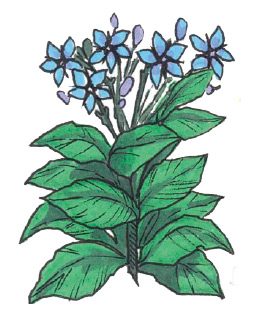
Rarity: Common
Environment: Plains and
marshlands
Harvest: Annual
Cost: 5 cp/ 10 fresh leaves
(food) or 1 oz. of dried leaves
(component)
Game Use: Component
(Item/Spell), Herb/Food,
Medicine (fresh leaves
and flowers pulped and
decocted for breaking fevers
or waking unconscious
victims, especially those
made so by poisons—gain a
Fort save to fight off illness or
poison effects early)
Borage is among the more hardy of annuals, its hairy
oval leaves and blue flowers growing up to 18 inches in
height along their stems. The leaves and roots are often
chewed when suffering colds or fevers, and waters infused
with borage help heal injured or sore eyes.
Borage is only used in preserved forms of macerated
oils made from fresh leaves, or in dried leaves either for
teas or as components in charm and many mind-affecting
spells.
Breeam
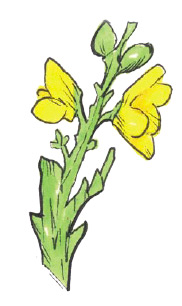
Rarity: Uncommon
Environment: Any forests and seacoasts
Harvest: Perennial
Cost: 5 sp/oz. of powdered bark or dried
flowers, 10 sp/Game Use: Component (Item), Herb/Food, Special (tossing a handful of
dried bark onto a fire emits a cloud
of smoke that turns undead in a 10’-diameter for 1d4 minutes as a 1st level
cleric)
Breeam is a tough shrub suited
for soft sandy soils, where its roots
help toughen the ground. The plant
produces strong, straight fibrous to
woody stalks, bright yellow flowers,
and seed pods that pop when ripe. Its
wood is used as thatch where it grows
in abundance, as well as for brooms or
woven into baskets. If carefully prepared while still freshly
harvested, breeam fibers can be pounded into paper or
woven into ropes or cloth. To get the most out of breeam, all its workings must be
done within days of being harvested, unless one simply
wishes to dry its flowers and bark. Its flowers or burnt
bark and wood provide some components for purity
and cleansing rituals (thus their usefulness in smoke vs.
undead). After breeam is soaked, heated, then stretched
and pounded out to separate and manipulate the fibers,
it can be woven into sturdy baskets, further pulped into
paper, or woven further into sturdy yarns, cords, and
ropes. Its innate purity makes it useful in magical clothing
or scrolls.
Bryonia
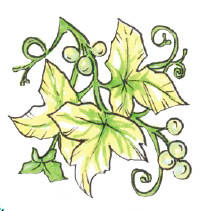
Rarity: Uncommon
Environment: Any marshlands or fresh water
coastlands and riverbanks
Harvest: Perennial
Cost: 5 sp/ 9 berries (fresh or as 1 oz. maceration)
Game Use: Component, Poison (DC Variable;
Nausea/1d3 Str +1d2 Con)
Bryony is a thick-rooted and fast-growing plant
that climbs and clambers over most things in its path
or along its rootpath, its brittle stems shooting up
from the base with hairy leaves
and greenish flowers (that
become orange berries
in early summer). All
parts of this plant
are poisonous, some
more than others:
stalks or root, DC 14,
leaves and flowers DC 16;
berries DC 17 to resist effects
above.
Special measures are
taken only when preserving
bryony for spell components,
and then it is only to crush together all
parts of a ripe vine, then macerate it in oil to be used as
components for numerous necromancy and transmutation
spells.
Caranator
Rarity: Rare
Environment: Any mountain forests
Harvest: Biennial
Cost: 120 sp/ 1 oz. of root, dried, 2 gp for whole root,
fresh
Game Use: Component (Item/Spells), Special (chew
a thumb-sized piece of root to gain a Will save vs. any
charms or enchantments immediately)
An ugly weed by all accounts, caranator is a tough
rhizome that crawls and clambers at great speeds, its dark
green heart-shaped leaves with black ribs and undersides
hardly brightening the plant. While it can spread over a 5-foot-wide area, caranator’s only useful part is its tuberous
central root—caranator root, when chewed, helps clear
the mind and allows many enchantments to be fought and
possibly overcome.
The root, if cut and dried and powdered, is more easily
distributed (by dissolving it into wine or water). It also
becomes highly useful as a component for illusions and
enchantments.
Cebada -barley-
Rarity: Common
Environment: Temperate plains and hills
Harvest: Annual
Cost: 5 cp/1 oz. of sprouted seeds or ground
meal
Game Use: Herb/Food, Medicine (boil dose
with water and imbibe for immediate reduction
of subdual damage by 1 point).
This low-grade cereal crop is common and
grows chest-high for most human farmers; it is
used in breads and suspended and fermented in
water to make beers and ales. Apothecaries and
midwives also use barley-laced water as a medicinal.
Cicuta
Rarity: Uncommon
Environment: Any temperate forests or marshlands
Harvest: Biennial
Cost: 15 sp/oz. of juice or per 4 oz. of dried leaves and
roots
Game Use: Component (Spells), Medicine (cure-all),
Poison (DC 15, Paralysis for 1d2 hours/1d2 Con +1d4
Str)
A malodorous scent defines hemlock before you see
the erect plant with a smooth woody stalk and feathery
brush-like leaves and tiny white flowers. Commoners
use this plant’s juices, highly diluted in salves or mixed
in wine, as an analgesic and sedative, knowing full well that its full-strength juice is an intense poison. Esoteric
uses for the herb fall under the darker magics, as befits its
virulence.
Hemlock must be harvested at night and the whole
plant—leaves, flowers or berries, roots, and stems—must
be mashed into pulp and crushed to drain the juices.
Hemlock juice exposed to sunlight evaporates quickly, so
it is rarely used directly but is a main ingredient in many
oil-based poisons. The only use for the plant remnants
after removing the juice is as dried spell components for
many necromancy spells.
Cilantro -coriander-
Rarity: Common
Environment: Any hills and mountains
Harvest: Annual
Cost: 5 cp/oz. of seeds
Game Use: Components (Item/Spells), Herb/Food &
Spice, Medicine (analgesic)
Coriander is an aromatic herb of tiny cloud-shaped
leaves that can grow on stiff stalks up to 3 feet in height.
Infused into water, coriander is a mild restorative and
healing agent used by apothecaries, but is most commonly
used to spice up food.
Coriander seeds are best used as components in spells
involving the mind and intellect or as part of a love potion
or spell.
Consuelda (Symphytum) -larkspur-
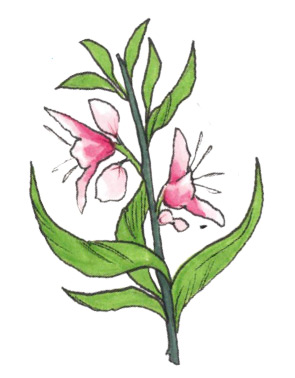
Rarity: Uncommon
Environment: Any temperate fields
Harvest: Annual
Cost: 7 sp/oz. of flowers, dried or fresh or 1/8 oz.
dried seeds or seed powder
Game Use: Decoration, Poison (DC 14; Nausea 1d4
hours)
Larkspur grows up to three feet tall, with tiny oblong
leaves and blue to purple blossoms through the summer
that lead to the flattened black seeds by autumn. The
flowers are pretty and abundant enough to lead to cuttings
used as decoration, but most simply wait until after the
autumnal equinox and harvest the black seeds for use as
an emetic poison.
Cúrcuma -turmeric-
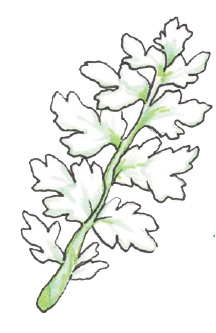
Rarity: Rare
Environment: Any warm marshlands
and lowlands
Harvest: Annual
Cost: 20 sp/ 1 oz. of turmeric oil or 2 oz.
fresh leaves
Game Use: Components (Items/Spells)
The rare turmeric plant shoots up from
a small root into a sheathe that unfolds thin but tough white-green waxen leaves along
the thick, well-protected stem. Unused by
commoners, turmeric leaf is best dried
and powdered for use in abjurations, or
mashed and the essential oils drained
and stored for use in purification and
protection rituals.
Damiana (Turnera diffusa)
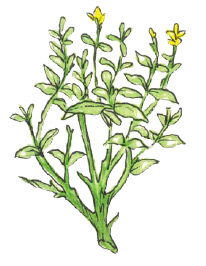
Rarity: Rare
Environment: Any desert or warm plains
Harvest: Annual
Cost: 60 sp/oz. of damiana, ground or cut sprigs
Game Use: Component (Items/Spells), Decoration/
Incense
Damiana is a tough, skinny ground-hugging shrub
that grows in warm climes along the edges of deserts,
its grayish-green stalks and dark green leaves only
producing tiny white flowers
in the early spring. Having
no commonplace uses, the
stalks and leaves are dried,
chopped, and mixed together
for use as an incense or as a
spell component.
The flowers and
seeds drop off soon after
blooming, but that isn’t
much help—only the leaves
and stalks are harvested. Dried
and ground to powder, damiana
becomes a primary component of
many philters and also sees use in
illusions and in emotion-affecting spells. As an incense,
it enhances the emotions and personal charismas of those
people within its vapors (Cha +1 for 1 hour), but
does not have any other game effects unless
combined with other herbs to induce
hallucinatory visions.
Dobhran
Rarity: Common
Environment: Temperate wetlands and swamps
Harvest: Perennial
Cost: 5 cp/oz. of leaves and roots
Game Use: Component (Item), Dye/Ink.
The dobhran leaves grow in large clumps from a
central stalk, like rhubarb or very tall, broad lettuce, and
are easily noticeable as waxy, rounded leaves of deep
green with white ribs. The central root and the inside of
the leaves contain an oily sap used as an insect repellant
and for waterproofing light leathers and canvas.
The leaves and root can be pressed to remove the sap,
and if reduced by heating, the sap becomes a brilliant blue
ink. If the leaves are harvested and allowed to dry flattened
under a muslin cloth, their fibers can be twisted together
to make cords as strong as hemp or woven together to
create clothes or rugs. While having no innate magical
potential itself, dobhran inks and fibers are excellent at
retaining magic and thus become useful in spellbooks or
miscellaneous items.
Endrino -blackthorn-
Rarity: Uncommon
Environment: Any forests
Harvest: Annual
Cost: 5 sp/oz. of berries (roughly 1 oz.
berry juice) or 2 oz. dried bark; 10 sp/8”
length of wood
Game Use: Components (Item/Spells),
Special (Just as garlic is anathema to vampires
and they will not enter areas laced with it, blackthorn
hedges and areas strewn with this herb are anathema to
evil outsiders and demons in particular.)
Blackthorn is a tough, woody bush that grows in tight,
impenetrable thickets and hedges, its ovular leaves and
tiny white flowers eventually revealing bright blue berries
in summer. These berries, when mashed and decocted and
preserved as a paste, are used as a medicinal purgative or
as a component of herbal restoratives. It is also used for
various spells across numerous schools and foci.
This herb needs no special preparations or
preservations. Blackthorn is a highly adaptable wood and
oft-used for wands or, on the rare occasions that it grows
large enough and straight enough, staves.
Enebro -juniper-
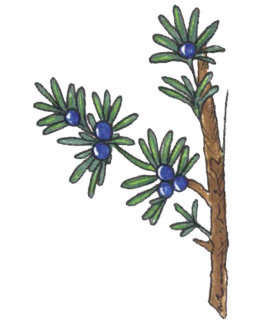
Rarity: Common
Environment: Any temperate forests or hills
Harvest: Perennial/Evergreen
Cost: 5 cp/oz. of berry juice or 20 berries or 3
oz. bark or twigs
Game Use: Herb/Food & Spice & Tea,
Medicine (poison antidote, salve or tea to
speed healing)
Junipers are aromatic evergreen trees
and shrubs with green nettles smelling of
pine and differentiated by the tiny green
to black berries all over them. The berries
take three years to ripen, but there are
always berries of varying age on each bush,
so harvesting is easy any time of year.
Seven juniper berries are often prescribed
as an immediate and sometimes helpful
poison antidote (Fort save allowed at –2,
only against herbal poisons), though most
often commoners decoct the berries and
bark into salves to soothe skin ailments or
help keep a wound clean. Oddly enough,
for all its curative uses, there seems to be no magical use
for juniper, though it is part of numerous alchemical and
herbal creations.
Equinácea
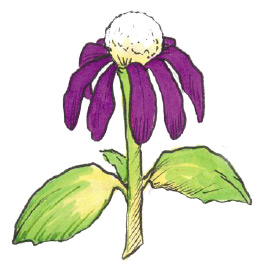
Rarity: Uncommon
Environment: Any temperate plains
Harvest: Perennial
Cost: 8 sp/oz. of dried petals or dried root
Game Use: Component (Spells), Medicine (aids in
preventing illnesses)
Echinacea, also known as coneflower, grows with
a smooth stem up to five feet high, leaves ranging from
ovate toothed leaves at the base to smoother spear-shaped
leaves higher up. The coneflower has a large head, with
many small petals ranging from pale orange through
red to purple, that blooms for most of the summer. Most
chew the raw or dried echinacea root to prevent infections
or to help resist any rampant illnesses. Esoteric uses for
echinacea tap their strengthening abilities to maintain the
health of a spellcaster using transmutation spells.
The echinacea root should be dried in long, thin slices
to dry out quickly and retain much of
its healing potential. Spellcasters
use the dried flower petals
and seed heads, so the head
of the coneflower is dried
whole and flat on a drying
rack, then crushed by hand
when casting spells.
Espino blanco (Majuelo)
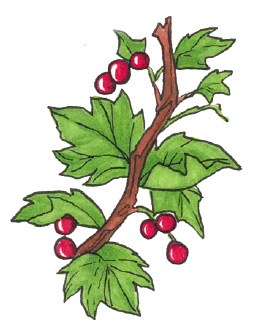
Rarity: Common
Environment: Any temperate
Harvest: Perennial (Deciduous shrub/tree)
Cost: 5 cp/ 1 oz. of dried blossoms or 3 oz. of twigs/wood
Game Use: Components (Items), Special (sprinkling the
fresh pollen from the fronds of the hawthorn blossoms into
the eyes allows anyone to see faeries and fey creatures,
despite any invisibility on their part, for up to an hour)
Hawthorns are quick-growing wood trees that can
reach 30 feet in height unless kept as brambles and
hedgerows, filled with their strong-smelling five-petaled
white flowers with red pollen apices at
the center. Midwives and commoners
tell of the wood’s ability to increase
fertility, making it a popular wood
to work into bed headboards.
Popular fables also link it to
witches, saying hawthorns
grew when witches tried
to imitate the powers of
druids and dryads.
No special
arrangements or
methods are needed
to harvest or preserve
hawthorn, though
the pollen’s effects
on the eyes only works
with fresh pollen straight
off a tree, not anything
stored or used later. Hawthorn branches and twigs make
excellent wands and staves (and is the primary wood used
in the mythical staff of thunder and lightning). Lastly, few
beyond herbalists know this but holy symbols carved
from hawthorn wood repel ghosts as if the cleric were a
level stronger in his faith. At the very least, a house with
hawthorn wood doors or trim never suffers the trespasses
of ghosts.
Euphasia (Ojo brillante)
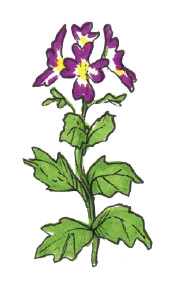
Rarity: Common
Environment: Any hills and plains
Harvest: Annual
Cost: 5 cp/oz. of flowers, dried or fresh or in macerated
oil
Game Use: Component (Item/Spell), Herb/Tea, Medicine
(infusions used as eyewashes and aids vs. blindness)
Never growing more than a foot and inches above their
woody roots, eyebright plants creep along the ground,their jagged deep green leaves and purple-veined lilac-and-white flowers helping
their stems stand out from the
grass. As per its name, eyebright has its
uses in clearing clouded eyes or helping
wash out injured eyes. Drunk as a tea
infusion from the flowers, eyebright
is a stimulant and helps focus the
mind (at least according to wizards
and other spellcasters).
Eyebright needs little preparation
or special treatment for preservation,
save to macerate the flowers to keep
them more than a few weeks. This
herb also goes into many spells
and items that affect the mind,
specifically those that heighten
or sharpen the mind’s clarity or
focus.
Euphorbia
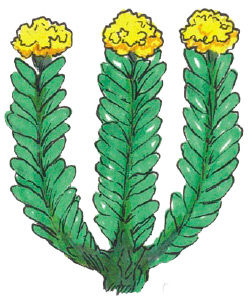
Rarity: Uncommon
Environment: Any
temperate
Harvest: Biennial
Cost: 15 sp/1
oz. of euphorbia
“milk” or 3 oz.
dried leaves
Game Use: Components (Items), Poison (DC 12; Nausea/
1d3 Str), Special (rub fresh leaves against skin to severely
irritate and cause rash and weeping blisters)
This taprooted herbaceous plant grows on an erect
hollow stem covered with lance-shaped leaves, flowering
in summer with clusters of two to six white blooms. The
skin of the fleshy stems
can be cut to collect the
milky juice from the
plant, which is used
as a purgative and
poison. Beggars have
long used the oily
leaves of euphorbia
to give themselves
rashes and blisters,
in order to gain more
alms out of pity. The
milky sap and the
plant itself are used in
numerous ointments and
balms and polishes, despite
its mildly poisonous nature.
The sap can be collected
(roughly 1/20 oz. per plant) and
stored in an airtight container out of the sun for up to nine
months. The uses of the plant matter stretch far longer,
and the milk is highly useful after distillation in many
potions.
Galangal (Jengibre azul)
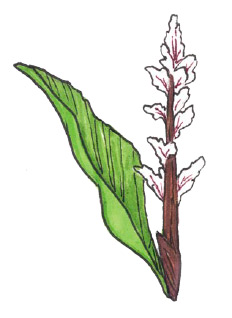
Rarity: Rare
Environment: Any hills or plains
Harvest: Annual
Cost: 30 sp/oz. of dried galangal root or 1 oz. of stems,
dried and crushed
Game Use: Component (Spells), Herb/Spice, Medicine
(Analgesic)
Galangal grows on an erect hollow stem like numerous
other herbs, and its leaves reinforce the stem before growing
beyond the sheathe and becoming spear-shaped leaves of
green with a whitish underside. The plant crowns itself
with a seed bud that rarely flowers, though winds carry
off the light seeds as they mature
and separate from the
bud. Commoners
boil the mild stems
in milk to relieve
colicky babies and
crumble the dried root
over meats and stews
to add a flavor similar
to ginger with a slightly
nuttier aftertaste. Among
spellcasters, the dried root sees
use as an effective counterspell
component as well as one for
abjurations and conjurations.
Hierba del tonto
Rarity: Uncommon
Environment: Any marshlands and riverbanks
Harvest: Perennial
Cost: 5 cp/oz. of leaves or flowers, dried or fresh
Game Use: Component (spells), Herb/Food, Special
(Chewing on 5 fresh leaves or an ounce of dried leaves
provides a calming effect and allows a Will save to help
end any fear or rage effects, including barbarian rages)
These fernlike weeds have small hollow stalks that end
in seed fronds, and the leaves cluster in trios along the stalk,
resembling the three-pronged jester’s cap and giving the
plant its name. The leaves and stalks are commonly eaten
as a leafy snack or lettuce of sorts, but fools’ weed is most
often used by commoners as an infused tea to help them
sleep. Adventurers soon learned that it had beneficial anti-psychotic properties and proved useful against fear and
rage and other emotional powers and effects.
No major harvesting or drying methods are required
for fools’ weed. Spellcasters prize this plant as a component
in illusions or enchantments, and its effects survive
decoction into potions and unguents. If macerated down
to a tincture, one drop would induce a Will save against
any mental effects.
Hierba de pipa
Rareza: Poco común
Entorno: cercanías de Yvonesse
Recolección: Otoño
Coste: 5 mp / libra
Uso en juego: Social (fumar la hoja de la Hierba de pipa da un +1 circunstancial
a Diplomacia), Antídoto (comer la hoja de la Hierba de Pipa da una oportunidad
de TS extra contra un veneno ingerido, pues genera vómito inmediato), Medicinal
(relajante, antihemorroides).
La hierba de pipa es un tipo de arbusto comúnmente de hasta 2
metros de altura cultivado por los gnolings y que crece únicamente en las
cercanías de Yvonesse. Posee hojas de color oscuro muy aromáticas que algunos
pueblos utilizan para quemar y aspirar su humo. Los gnolings utilizan pipas de
madera para realizar este acto.
Hisopo
Rarity: Common
Environment: Any temperate
Harvest: Perennial
Cost: 5 cp/ 4 oz. of leaves or 2 full stalks of leaves or 3
bunches of flowers
Game Use: Component (Spells), Decoration/Incense, Dye,
Medicines (various)
This shrub-like herb does not wander far off its root
stem like other herbs, and its strong woodsy stalk
grows straight and tall with lance-shaped leaves
growing every few inches along it, the bright
blue flowers of summer occurring in whorls of
a dozen or more blossoms. Hyssop is among
the most commonly used of a midwife’s or
apothecary’s herbs—in tea infusions and
gargles to calm stomach discomforts and
soothe raw throats, soaked in dry sachets
in baths to help body aches and pains,
and as an unguent vs. rashes and bug bites and stings. Beyond
medicinals, the flowers and
roots can be boiled to make
deep blue dyes and paints.
Esoteric uses see it as the
most common incense
or smudging herb for
purification rites and
cleansing of areas and
items.
Tied in bunches and
dried immediately after
midsummer, the hyssop
blossoms don’t fade
in color. The leaves are
usually just dried, though
macerating them in oil and
beeswax makes a balm that can
be easily stored for years. Hyssop
blossoms and leaves in oil create a
purplish-black oil that can be burned as
a lamp oil in temples and achieve similar
effects of purification without smudging. Hyssop flowers
are highly useful as components for counterspelling
necromancy spells or casting abjuration spells.
Horcaria
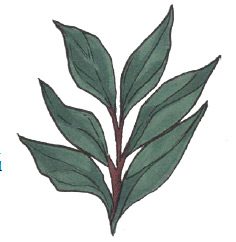
Rareza: Poco frecuente
Entorno: Bosques profundos
Recolección: Anual
Coste: 40 piezas de plata /puñado de hojas
Uso en juego: Veneno (consumirla en infusión afecta seriamente la capacidad de
usar magia arcana)
Este pequeño arbusto de hojas marrones largas y ligeramente pegajosas, produce
unas infusiones marrón oscuro y un marcado sabor amargo. Los efectos
físicos visibles en un lanzador de conjuros que ha ingerido mucha horcaria
incluyen fatiga, mareos, debilidad hasta el punto de ser incapaz de moverse o
hablar y finalmente la pérdida de consciencia. Su efecto es rápido y quien la ha
tomado tarda varias horas en recuperarse por completo. Después de recobrar el
conocimiento, la debilidad y la dificultad para usar magia persistirán un tiempo
más, aunque el caminar contribuye a acelerar el proceso. Los días siguientes a
haber bebido una infusión de horcaria la persona sentirá dolores de cabeza y
retortijones de estómago. Por supuesto, todos estos efectos serán menores cuanto
menor sea la dosis de horcaria ingerida y no se cortará todo el acceso a la
magia, sino que sólo se limitará. Una infusión de unas 4 hojas de horcaria
incapacita el uso de magia por 2d6 horas. Tendrá que pasarse una tirada de
Fortaleza CD 20 para no perder el conocimiento en 1d4 minutos tras ingerir la
infusión. La horcaria no afecta de la misma manera a los que no son capaces de
usar magia.
Ilex -holly-
Rarity: Uncommon
Environment: Any forests or light woods
Harvest: Biennial
Cost: 10sp/oz. of berries or leaves (dried or fresh)
Game Use: Components (Items/Spells), Medicine (leaf
tea to fight fevers)
Holly’s spined waxy leaves and white or red berries
are easily spotted when it is found, growing anywhere
from small evergreen shrubs up to a 50-foot high bush
or hedgerow. Of all the herbs in existence, there are more
folklore remedies and tales tied to holly than any other
herb. Carrying it brings everything from good luck for
children to protection from lightning or mischievous
sorcerers. Brewing leaves into a tea increases body
temperatures but also breaks fevers. Spellcasters and
learned individuals do find many uses for the herb as
a spell and item component.
A hardy plant, holly’s powers are great only
if no metals are used in harvesting (i.e. bone or
stone knives). Berries and leaves must be dried
separately, and the remaining stems are discarded
(and macerating the dried berries creates a base used
for poisons and curatives alike). Among spellcasters,
holly leaves and berries are used for abjuration spells or
anything designed for protection.
Iris (Svarda)
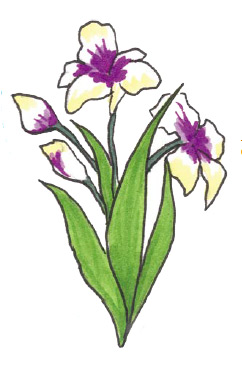
Rarity: Rare
Environment: Any temperate to sub-tropical hills
Harvest: Perennial
Cost: 20 sp/oz. of flowers or root, dried or fresh
Game Use: Components (Spells), Decoration/Perfume,
Dye
Orris’ lilac to blue coloration and uses are all that
separate it from other irises. So rare but so beloved to
Herbal
commoners, most orris plants are found in
royal gardens or near noble estates so they
may benefit from the perfumes derived
from the dried root or the dyes from
the plant’s juices, which are used to
bleach hair, skin, or linens. Herbalists
use this plant in numerous unguents
and powders, while spellcasters use the
flowers as components for scrying and
divination.
Lágrima de Hada
Rarity: Uncommon
Environment: Any temperate
Harvest: Annual
Cost: 5 sp/1 pound of berries or 4 oz. fresh leaves; 10 sp/bottle of Dryad’s tears wine
Game Use: Dye, Herb/Food & Spice, Special (odor repels
lycanthropes like blackthorn with outsiders and garlic
with vampires).
This berry-laden plant is a climbing, clinging vine with
triangular, waxy leaves and thick, succulent stalks with
tiny white flowers that turn to bright blue berries that look
like tears. Most commoners simply harvest the berries to
make easily-stored jams or ferment them into wines, as
well as drying and boiling out the essential oils of the fresh
leaves in autumn to make a rich blue dye. Spellcasters do
much the same with them, though they allow the vines to
grow unchecked around their homes to protect them from
werewolves and other lycanthropes who can hardly bear
the sweet scent of the vines.
Llamarada
Rarity: Uncommon
Environment: Any temperate forests
Harvest: Biennial
Cost: 30 sp/ 1 oz. of dried root
Game Use: Component (Spells), Special (Snap this root
beneath the nose of an unconscious person (or slip a
sliver of the dried root beneath the tongue) to give him
a temporary hit point for 1 minute in order to move him
out of danger).
Remarkable only for its strong scent and its spiraling
shoots that wrap around nearby objects, firesnap appears
ordinary above ground—its tiny spade shaped leaves
clinging along thin grasping vines, all in a ruddy red-brown.
The root—the only useful part of the plant for
most—is blood red and stronger in scent than onions.
Often kept dried in long pieces, firesnap has been useful
in reviving fainting princesses for centuries. However,
this root has no effect on conscious individuals other than
their reactions to the sharp, pungent odor.
Dried in eighths, as the root tends to be as large around
as a tuber or potato, firesnap is only useful in pieces longer than it is wide, so that it can be snapped and its scent
released easily. Dried and ground root loses much of its
odor, but firesnap is an effective component for evocation
spells as well.
Lúpulo -hops-
Rarity: Common
Environment: Any temperate
Harvest: Perennial
Cost: 1 cp/ 12 buds
Game Use: Herb/Food, Medicine (Chewing on
a bud acts as a sedative and calms down
a person, as does an infusion of
crumbled buds).
This climbing herbaceous
plant grows easily and quickly,
its thick roots sending out shoots
of climbing tendrils that wind
in clockwise patterns around
anything within reach of its heart-shaped leaves. After the flowers
bloom in late spring, the catkins at their
centers mature into the tough buds used
by brewers to help preserve their beers.
Thus, hops are found all over any d20 worlds and
used heavily by brewers, with, alas, no esoteric uses
whatsoever, save for a wizard’s own beer supplies.
Maguirosa (Rosa del Mago)
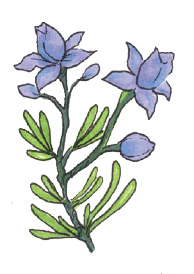
Rarity: Rare (nearly exclusive to
cultivated forms in exact locales)
Environment: Wizards’ gardens
(cultivated) or temperate
mountains (wild)
Harvest: Biennial
Cost: 150 sp/ rosebud (fresh or
dried) or 10 sp/petal or 1 oz. dried
thorns
Game Use: Components (Spells),
Decoration
Developed a few centuries ago
by a mage-herbalist, rose of mages
looks and smells like the common
deciduous rose save that its waxen branches
are jet black and its flowers come out a midnight blue with
a few specks of white (leading some to call this the starlit
rose). It has no common uses, as it is still limited to
cultivated patches in walled gardens (though this can
change in anyone’s world if so desired by the GM).
Wizards prize this plant, as its petals can be used as
a universal spell component substitute in nearly
all magics save for necromancy or evocations.Harvesting the plant in order to retain its
special qualities requires the use of no tools
beyond mage hand or prestidigitation to pluck the
rosebuds or fully bloomed roses from the bush;
harvesting or preserving the thorns requires no
special treatment. Preservation needs only to
separate petals and spread them across drying
cloths to dry them and keep them useful for spell
components, though dried full rosebuds are more
useful for item creation.
Mandrágora
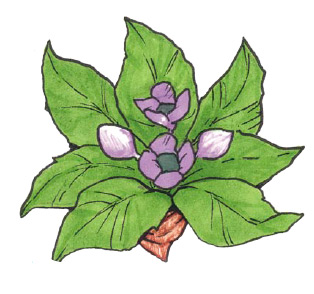
Rarity: Uncommon
Environment: Any temperate to
sub-tropical hills
Harvest: Perennial
Cost: 5 sp/oz. of dried root or one fruit, fresh
or dried
Game Use: Component (Spells), Medicine (fruits prepared
as analgesics and sedatives, root useful versus mania or
melancholy) Poison (DC 17; Unconsciousness & Sleep 1d8
hours/1d2 Con*)
Mandrake appears with light brown erect stalks up to
a foot high, with ovate dark green leaves that flatten
upon the ground over time, the greenish-white cup-shaped flowers eventually producing a round green
fruit by early summer. Mandrake gets its name and
notoriety from its brown turnip-like root that often
splits in two or four parts and sometimes resembles
a man (leading to its use as a poppet by some witches
and adepts). Popular folklore gives this plant many
uses, from the whole root as a fertility amulet to its fresh
fruits capable of ridding anyone of spiritual possession.
The root, decocted in teas or a tiny bit chewed directly, acts
as an anesthetic and removes pain by seriously sedating
the imbiber (Fort Save or sleep for 1d4 hours), but this is
best done only by an apothecary or the treatment acts as a
poison (as above).
No special preparations must be made to harvest or preserve
mandrake roots (beyond the normal cutting
to dry it more evenly) or fruits.
Spellcasters find mandrake
useful in sleep spells and
it seems particularly
helpful in summoning
or banishing spells
involving outsiders
(though never
as effective as
the folklore
that suggests a
mandrake root on
the door prevents
any passage by
demons).
Mástique
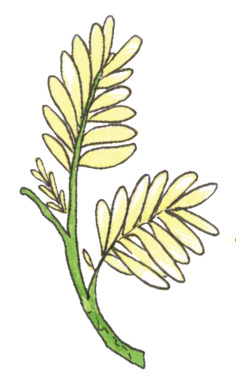
Rarity: Rare
Environment: Any temperate
Harvest: Perennial
Cost: 20 sp/3 oz. of leaves, dried or fresh or 1 oz. mastic
oil
Game Use: Component (Items/Spells), Decoration/
Incense
Mastic is a low-growing fern that never
exceeds 10 inches in height, with narrow light
green leaves in pairs along the tapering
flexible brown stems. Mastic leaf, as
an incense by itself, is unremarkable,
but it has the ability to sharpen and
enhance other incenses and essences.
As such, crushed mastic is useful to
anyone creating alchemical, herbal,
or magical items as an enhancer of
essential oil properties.
Only the leaves are useful,
though the plant needs to be cut
down each autumn, so most tend
to dry mastic leaves on the stems
upside-down and then collect the
dry leaves later (as opposed to drying
flat on trays). To best preserve mastic’s
properties for item use, mastic should be
macerated in cold oil, though dried mastic
leaf is a useful added component when casting
Maximized spells or as a general component
for conjurations.
Milenrama -mantle sage-
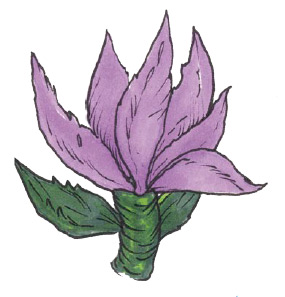
Rarity: Rare
Environment: Any Temperate (uncommon in mountains)
Harvest: Perennial
Cost: 20 sp/oz. of dried leaves or flowers or 1 oz. macerated
oil of same
Game Use: Components (Items), Decoration/Incense,
Dye/Ink, Herb/Spice
Variegated and tinged with blue, purple and red
across the thin arrow-shaped leaves; mantle sage
grows on erect stems (up to 40 inches high) with
many woody branches that erupt in blood-red
late summer flowers atop the stems. The dried
flowers, leaves, and roots mixed in candle wax
and burned creates its name—the smoke is heavy
and clings to the area close to the candle, creating
a pungent mantle around the user. The flowers
also have uses in dyes and inks.
Leaves, flowers and roots must all be
harvested and dried separately. Unless
immediately ground up and mixed into
candles, mantle sage has a short shelf life
compared to other herbs; it is impotent after 4
months in its dried state, unless reduced to inks or dyes,
or macerated into oils for use as such later. Spellcasters use
mantle sage in apparently the same ways as commoners,
though they alone know that the red inks created by the
root and flowers hold magics well and are a common ink
used on evocation spell scrolls. They also use its clinging
smoke property in magical incenses and candles.
Mirra (Karan)
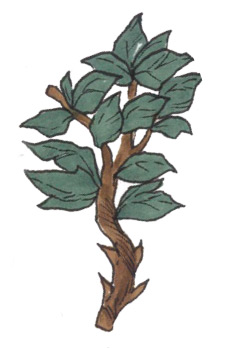
Rarity: Rare
Environment: Any warm plains or
desert
Harvest: Annual
Cost: 20 sp/oz. of dried resin or 4
oz. dried wood
Game Use: Component (Items),
Decoration/Incense & Perfume
Karan is a small brown shrub
densely covered in waxy spade-shaped green leaves. The karan
wood and its dried leaves are burnt
to purify areas, but given its rarity,
this is only done in some temples. More
often, the leaves are dried out and mixed
with the drying resin to create incense,
while the fresh resin has also been used
as a perfume. Tapping the dark resin and
assating it makes it useful for alchemists and
wizards in numerous healing and protective
devices.
Muérdago -mistletoe-
Rarity: Uncommon
Environment: MPD
Harvest: Annual (harvest in early winter)
Cost: 1 sp/ 4 fresh berries or a hand-sized sprig of
dry mistletoe wood
Game Use: Component (Spells),
Decoration
Mistletoe is a parasitic plant found
growing on the limbs and trunks of larger
deciduous trees such as oaks, producing
tough white-green ever-branching
stems with white berries at nearly every
offshoot. Like holly, mistletoe has more
folklore attached to it than true uses, and
is most commonly used as a decoration
(or as an invitation to steal a kiss from anyone
standing beneath it). Among spellcasters, mistletoe
is revered and used heavily by druids and herbalists, as
the mashed or dried berries are useful in numerous herbal
restoratives and unguents.
Only gold implements should be used in the harvesting
of mistletoe, to ensure that its viability and essence remain
unspoiled. Mistletoe berries’ potency does not carry over
to a dry state, so berries are often quickly mashed and
reduced to tinctures or decocted into a diluted liquid that
stores well. It is a universal spell component for druids.
Origanum (de Vúlpara)
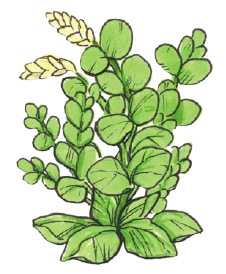
Rarity: Uncommon
Environment: Any temperate
Harvest: Annual
Cost: 5 sp/oz. of dried flowers,
buds, or leaves and stalks
Game Use: Component (Spell),
Medicine (decocted in ale or wine to
clear the head or help resist lingering effects
of poisons—regain 1d3 hp of subdual damage
caused by poison or intoxication)
Dittany of Crete grows only 8 inches high with
squarish stalks, velvety round leaves, and seed buds
that bloom into tiny purple flowers in late summer. Midwives decoct the plant
into wine to ease and
speed deliveries,
though the same
medicines are used
to aid in the flushing
of poisons from the
system. Spellcasters
use dittany as a
prime component
for divinations, either
directly using it in
casting or burning it in
a censer or brazier to
manifest spirits and
their spells.
Olibanum (Frankincense)
Rarity: Uncommon
Environment: Any warm plains or forests
Harvest: Perennial
Cost: 5 sp/oz. of dried gum resin
Game Use: Component (Items),
Decoration/Incense
This deciduous tree grows in warmer
climes and sheds its elliptic pointed leaves
every fall, which is the best time to tap the
tree for its gummy resin, from which incense
is made. The wood isn’t good for burning
or carving, so the only uses any folk have for
olibanus is as an incense producer. Alchemists use
olibanus heavily in creating alchanas. Some say that the
scent of olibanus can keep away those outsiders who have
fallen from grace, as the smell reminds them of holy places
(but this has not been proven to be universally true).
Onís
Rareza: Poco frecuente
Entorno: Islas de los Mares Tranquilos
Recolección: Anual
Coste: 2 monedas de plata / oz de hojas secas
Uso en juego: Medicinal (consumir una infusión da un +2 a las tiradas de Sanar
recibidas)
El onís es otro arbusto de la familia del azuj, que sólo
crecen en zonas montañosas cercanas a la costa. No da frutos de ninguna clase,
pero se ha descubierto que sus hojas alargadas ayudan enormemente en la curación
de heridas y enfermedades.
Pomelo (Sukake)
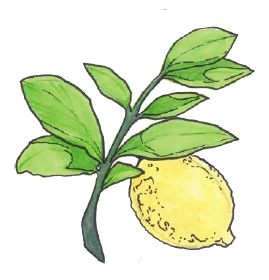
Rarity: Rare
Environment: Any warm hills or plains
Harvest: Biennial
Cost: 5 gp/ 1 sukake segment, fresh or dried
Game Use: Component (Spells), Poison (Narcotic DC 13
Int -1 and Wis -1/Sleep 1d4 hours)
Sukake is a small, unassuming tree that
produces emerald green waxen tear-shaped leaves and small yellow
fruit every second year. The
fruit, to a commoner, tastes like
lemons though their flesh inside
the rind is a pale orange to dark
yellow, and the fruit only serves
to induce hallucinations or drop
the victim into a dream-filled sleep
of wild visions. If properly prepared,
priests and other spellcasters can eat a
sukake as a free action while casting a
divination to make the spell act as if cast
with a Maximize Spell feat. However, they also must
ride out the effects of the fruit and fall into a coma-like sleep for 1d4 hours before they can report
on the divination’s effectiveness.
Prímula -cowslip-
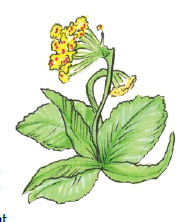
Rarity: Common
Environment: Any temperate
hills, plains, and forests
Harvest: Perennial
Cost: 5 cp/oz. of flowers,
dried or root, dried
Game Use: Component
(Spell), Herb/Food,
Medicine (Analgesic,
Relaxant)
Cowslip is a short plant
with a rosette of wrinkled leaves (velvety on the
underside) at the base, from which grows a slim leafless
stem that produces a side-canted yellow blossom with a
red center. Midwives and apothecaries use cowslip in a
bath for relief of aching joints and wounds, and it also
can be infused in a tea to induce sleep. Lastly, it can
be fermented into a mild white wine that travels
and stores well. Spellcasters use cowslip to increase
the chances of summoning fey creatures.
All parts of the plant can be dried and stored
together, though only the flowers are useful as spell
components. Used with summoning spells, cowslip
increases the chances of summoning a fey creature
(perhaps even adding an equivalent monster to the
summoning lists that might not normally be there).
Sangre de drago (Dracaena)
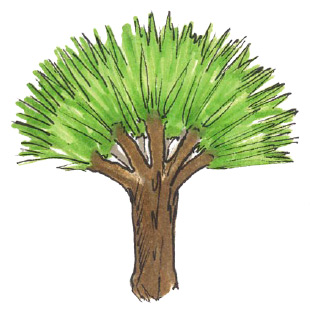
Rarity: Rare
Environment: Warm plains and marshlands
Harvest: Annual
Cost: 60 sp/oz. of resin (liquid) or 1 oz. dried resin or 2 oz.
dried bark
Game Use: Component (Items), Decoration/Incense,
Special (adding a pinch of dried dragon’s
blood resin to any ingestible has a 50%
chance of increasing its effectiveness
by +1 per die of effect).
Dragon’s blood is an
evergreen palm tree of small
to average height, with tough
stringy bark that can be peeled
off in strips and a thick amber
to crimson resin that can be
tapped in early autumn. The
bark can be twisted into a rough
cord similar to twine, though it also
gets dried in small chunks for use as incense.
Alchemists love dragon’s blood resin as a reagent
for many other substances and it enhances many
effects and powers without making the concoctions
unstable.
Dragon’s blood bark can be peeled off nearly
year-round, though a tree should never be stripped
beyond one side of its trunk. The resin, if kept out of
sunlight, can keep for up to eight months without losing
its potency. It can also be spread on wooden trays and kept
in the sun, so that it dries into hard translucent umber-colored lumps. Both the
dried and liquid forms of resin
are used in many magical and alchemical or herbal items
to enhance minor properties of other ingredients.
Serbal -rowan-
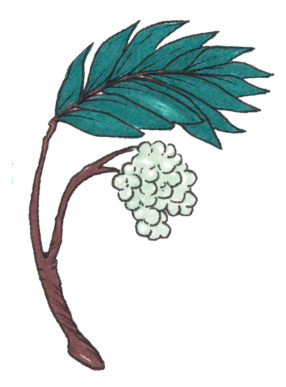
Rarity: Uncommon
Environment: Any temperate
Harvest: Perennial
Cost: 5 sp/oz. of leaves or 6 berries
Game Use: Components (Items/Spells), Special
(Rowan wood always gets a Fort. saving throw
against magic, even if not enchanted or treated, and
has a 50% chance of naturally boosting an enchantment
by +1 when created.)
Rowan is a small deciduous tree (up to 30 feet in
height) that produces saw-toothed, lance-shaped
leaves and orange to red berries. Using a walking
stick made from rowan wood protects the
bearer from blisters, according to common
folklore, and many carry two rowan twigs
twined together as protection against
random evils and spells. Still, despite
all the folklore, there are no common
uses for rowan. Alchemists love
rowan wood for its strength and its
even flame, as well as its protective
qualities. Spellcasters use rowan as
one of the hardwoods for staves
and wands, and its ability to
help protect bearers from magic
makes it highly sought for use in
shields. Druids use rowan wood
and berries only slightly less than
oak, holly and mistletoe, and its
berries or twigs are often used as
spell components.
Sirolio
Rareza: Común
Entorno: interior del continente de Draak
Recolección: Anual
Coste: 2 mc / puñado de hojas secas, 1 mp por oz de savia
Uso en juego: Medicinal (colgar un manojo de hojas de sirolio en una casa da un
+1 a las TS de Fortaleza de la gente de esa casa), Componente
(Objetos/Conjuros).
El sirolio es un tipo de árbol conífero continental de
interior, que crece lejos del agua salada, tan alto que puede llegar a los
ochenta o más metros. Es de hoja perenne y buena madera, aunque muy difícil de
cortar. Se sabe que es un árbol de fuertes propiedades vigorizantes y en muchas
casas campesinas se suele usar para colgar ramos de hojas o incluso como
condimento. Los conjuros de transmutación como Agrandar persona, en caso
de añadir un poco de savia de sirolio como componente material del conjuro,
duran un asalto adicional. En los pueblos de Lundia es común mezclar un poco de
esta savia de árbol con la leche de los niños.
Sirpe
Rareza: Poco frecuente
Entorno: lugares fríos
Recolección: Anual
Coste: 2 mp / oz de savia
Uso en juego: Componente (Objetos/Conjuros; la savia de sirpe, usada como
componente material en conjuros como Enmarañar, prolongan en 2 asaltos la
duración del conjuro), Medicinal (Unguento contra los dolores de espalda)
La sirpe es una enredadera gigante que crece en lugares
fríos. Tiene un tallo de, aproximadamente, un metro de diámetro y hojas de gran
tamaño, algunas de tres metros de largo. Suele crecer en paredes montañosas que,
con el paso de los años, agrieta o rompe. Alcanza tamaños descomunales para un
vegetal, incluso los doscientos metros o más.
Itea virginica (Aguja dulce)
Rarity: Uncommon (temperate),
Common (warm)
Environment: Any Temperate or Warm
lowlands, plains, and marshes
Harvest: Perennial
Cost: 5 sp/oz. of dried or liquid resin or
one leaf, fresh or dried (price drops to 5cp in
warm climes)
Game Use: Component (Spells), Herb/Food,
Special (smear fresh sap directly onto flesh to
cancel out any effects of natural cold, as it warms
skin on contact)
Sweetspire is a small tree that reaches upwards of
20 feet in height, its thick trunk sheathed by the waxen
and succulent leaves that spiral up the central trunk and
end in convex triangular shapes not unlike the smaller
aloe vera shrub. The tree gains its name from its
gummy sap, which is edible and quite sugary.
The resin is a natural sedative and is also
a food source for many small animals.
Sweetspire has many common uses, as
its sap-filled leaves can be boiled down
and fermented into a potent sweet white
wine that travels well, and the leaves
can also be dried to make an incredible
kindling (the resin within the dried leaf is
highly flammable). Adventurers carry small
bottles of the resin for making torches or easy-starting fires.
While harvesting is of little consequence or
problem, preservation of the sweetspire leaves must
be done quickly. Drying the succulent leaves involves
an hour of light baking within an oven or ringing a
campfire within six hours of harvesting, and then the
leaves must be dried separately on racks for another
month. In this form, wizards use the leaves as components
for fire spells. A little-known use for the fresh fronds and
resin is this: they provide an immediate Fortitude save
against any paralysis effects if two or more leaves are
broken open and smeared onto a victim’s skin (save at -1
if only swallowed).
Tallquill
Rarity: Common
Environment: Temperate lowlands and
marshlands
Harvest: Perennial
Cost: 4 cp / 8 stalks, whole or 1 oz.
ground seeds (for ink); 2 sp/1 sheet
paper
Game Use: Component (Item), Dye/Ink
Tallquill reeds grow up to their full
height of four feet and sprout tassels of
seeds twice a year, in early summer and
late autumn. Commoners harvest tallquill
reeds to use as kindling or thatch, or as
bedding for animals. The learned folk grind
down the seeds and boil the reeds to create
cheap and highly effective inks and paper.
Once boiled to pulp, the reeds can be flattened
and spread out like papyrus, forming strong
nonacidic papers, and the seeds are ground
and mixed with oils and water to make
inks. While totally nonmagical in nature,
tallquills are still highly prized by
scholars as a constant source of paper
and inks (the reeds can also be dried
and sharpened as quill pens for a
third scholarly use).
Tamariz
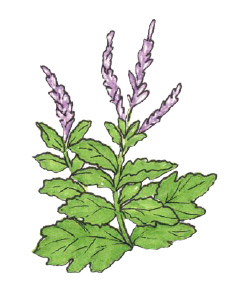
Rarity: Rare
Environment: Any warm hills and
seacoasts
Harvest: Perennial
Cost: 50 sp/ 1 pound of dried tamarisk
bundles
Game Use: Components (Items/Spells),
Special (Burning tamarisk is as offensive to
any reptilian creature, from snakes up to
dragons, as garlic is to vampires.)
Tamarisk grows on straight hollow
stems that reach close to three feet in
height, with frequent small branches
covered with tiny leaves or topped by
heavy tassels of gold flowers in summer.
Often used by lay people and priests in
exorcisms, tamarisk has no commonplace
uses. It is highly sought by all alchemists
and practitioners of magic for its leaves
and stalks, both of which are used heavily
in transmutation and evocation spells as
well as in many higher alchana (Tamarisk
is rumored to be an essential ingredient for
Emerald Tablets.).
Tamarisk must be harvested only with gold
and silver implements (preferably a gold ax
and a silver pruning knife). It is dried in
bunches upside-down and whole, although
macerations of crushed stems and fresh
leaves are common among alchemists.
Some attempts have been made to
cultivate this plant to grow larger so
reptile-slaying arrows might be carved
from it, but to no avail.
Treco
Rareza: Poco frecuente
Entorno: interior de bosques templados
Recolección: Anual
Coste: 1 mp / oz de flor, 1 mp por kg de madera
Uso en juego: Decorativo (la madera de treco es muy bonita, negra con brillos
rojizos), Componente
(Conjuros; todos los rituales druídicos efectuados con madera de treco tienen un
+1 en las TS en contra, si las hay), Infusión/Té (el pétalo de su flor se puede
consumir en té y hace que los daños a característica sufridos por no-muertos se
curen al doble de velocidad).
El treco es un árbol de hojas y corteza negra. Crecen
únicamente en el corazón de bosques viejos. Alcanzan un tamaño de entre diez y
veinte metros de altura. Su madera negra es muy valorada para la fabricación de
objetos de cualquier tipo.
Valeriana
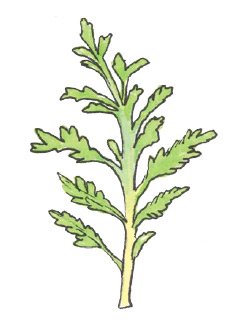
Rarity: Common
Environment: Any hills and lower mountains
Harvest: Perennial
Cost: 5 cp/ 1 oz. of dried root
Game Use: Herb/Tea, Medicine (analgesic
and sedative)
Often found by its strong scent, valerian
grows on slim but erect stems with long, hairy
saw-toothed leaves and topped in summer
by pinkish flower combs and bunches. It is
among the more useful herbs for apothecaries,
midwives, and commoners, put to use in teas or
tonics to ease pain, aid sleep, and relax muscles. It
has no esoteric uses directly, though its oils are useful
in sleep potions and items with tranquilizing effects.
Verbena
Rarity: Uncommon
Environment: Any temperate mountains and
hills
Harvest: Perennial
Cost: 5 sp/ 1 oz. of leaves, dried
Game Use: Components (Items/Spells),
Decoration/Incense, Special (Fresh
or dried whole plants are useful in
cleansing an area of corruption or evil
spirits, both as smudging incense and
as brooms—+1 level to any turning or
rebuking attempts against undead or
other spirits for one hour after burning)
Vervain grows stiffly erect up to two feet
high, with saw-toothed leaves of three lobes
each and blossoms that grow in spikes atop
the main stems and strong side branches.
Vervain is only used among commoners
as a cleansing agent, either as strong
brooms or burned as incense to clear
away foul odors. Alchemists have many
uses for vervain in all its forms; priests
use the plant—dried and crushed—as a
temple incense, and magic-users find the
leaves useful in divinations.
Verbascum (Gordolobo) mullein
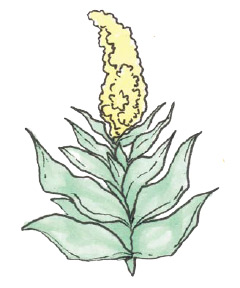
Rarity: Common
Environment: Any temperate
Harvest: Biennial
Cost: 3 sp/ 1 oz. of flowers or leaves, dried
or fresh
Game Use: Decoration (flowers), Herb/Tea, Medicine (general laxative and good vs.
digestive ailments)
Mullein grows up to five feet tall on stalks
covered in woolly white-green leaves, its flowers
growing in a tight spike atop the stalks in midsummer.
Mullein flowers and leaves are infused into teas to
mediate all manner of stomach and digestive ailments,
even gargled to alleviate toothaches. Infused and
macerated oils and ointments prove useful against burns
and the strong odor helps open clogged nasal passages
for aid in breathing.
Yuca
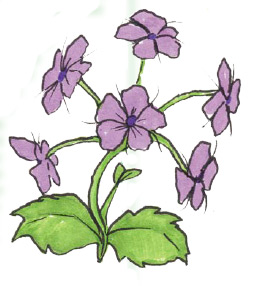
Rarity: Uncommon
Environment: Any warm plains or deserts
Harvest: Perennial
Cost: 5 sp/ 1 oz. of leaves, dried or fresh
Game Use: Component (Spells), Herb/Food
This evergreen plant grows no higher than two feet,
its thick cluster of dagger-shaped leaves hiding a central
stalk from which grow large white flowers. Long thought
pretty, many find the root of this plant useful to mash and
create a starchy, heavy travel bread. Magic-users have
long prized yucca leaves as aids for shapeshifting.
No special preparations are needed to harvest or dry
yucca root for food, though the leaves must be carefully
and individually plucked off the stem and root structure,
as tears in the leaf render it useless for magical purposes.
Similarly, drying yucca leaves must be covered to help
them stay flat and long. To activate the magics in them,
the leaves are twisted when used as spell components
for transmutation and evocation spells. They can also be
twisted together and looped around a finger, an arm, or
as a crown around the head (if casting primitively and
ritually like adepts).
Zrékarion (El Árbol del Bien y del Mal)
Rareza: Único
Entorno: Isla de Azur, Mar de Vúlpara
Recolección: Dos frutos al año
Coste: 1000 po / fruto
Uso en juego: Especial (Un fruto del árbol tiene un 50% de otorgar un deseo al
que lo coma), Medicinal (la infusión de las flores del árbol da un +10 al Sanar
recibido), Componente conjuro (+20 PPs por fruto).
El Zrékarion es uno de los árboles sagrados de Boccob que
existen en el Orbe, aunque en realidad se desconoce por completo el sentido de
su existencia, si es que lo tiene. El mito cuenta que cuando el mundo estaba
libre de hombres y bestias Boccob bajó al mundo y creó a los hombres y, al
decimotercer día, les enseñó el uso de la Magia. Lo hizo plantando este árbol y
haciendo que floreciese y diese fruto, y aquellos de entre los hombres que
comieron aquel fruto conocieron la Magia, y ésta pasó a sus hijos, y a los hijos
de sus hijos. Otro mito dice que en realidad este árbol pertenece a Ao, no a
Boccob, y que es el Árbol del Equilibrio, creado por la naturaleza para
compensar el Bien y el Mal en el mundo. Cualquiera que sea el origen del árbol,
la realidad es que se trata de un formidable árbol de hojas doradas perennes, de
unos quince metros de altura. Todos los años, el día del Solsticio de Verano y
el de Invierno, le nace un fruto en alguna de sus muchas flores doradas. Se
trata de algo similar a una manzana dulce. Comer uno de estos frutos otorga,
temporalmente, un gran poder (hay un 50% de posibilidades de que otorgue un
deseo al comerlo y el otro 50% de que no pase nada en absoluto). Algunos
sabios creen, aunque esto es muy difícil o incluso imposible de demostrar, que
cuando uno lo come con intención de usar su poder y éste se torna en un fruto
estéril, en realidad lo que está pasando es que una contrapartida de la misma
magnitud sucede en algún lugar del Orbe (de forma que si un sabio pide, por
poner un ejemplo tonto, un espejo de cristal, o bien se le concede el deseo y
aparece de la nada un espejo formidable o, en algún lugar del Orbe, un espejo
que existía se hace añicos). Los frutos están maduros por siete días, luego
pierden su poder. Si en vez de comerlos se usan en algún tipo de conjuro mágico,
dan (eso siempre) 20 PPs cada uno, lo cual los hace incalculablemente valiosos
para rituales y hechizos poderosos. El árbol está situado en la isla de Azur, en
el Mar de Vúlpara. Está situado en un jardín alrededor del cual se levantó la
Ciudadela de la Orden de la Estrella, comúnmente conocida como Orden de Magia.
Sólo el Círculo de los Ocho magos tiene permitido usar los frutos del árbol.
Para que esto suceda han de acceder por unanimidad, lo cual no siempre se
consigue y no es raro que los frutos se marchiten. Es famoso el bastón
del Pequeño Simón, un mago que, en sus tiempos de aprendiz, estudió en Azur y un
día se coló en el jardín donde la Orden de Magia custodia el Zrekarion. Se dice
que al aprendiz no se le ocurrió otra cosa que romper una rama del árbol para
hacerse un buen bastón; tras eso, huyó de la isla. La Orden de Magia paga una
buena suma por recuperar dicho bastón.